


Inflatable Travel Pillow


An inflatable travel pillow gives your head a defined resting surface when a narrow airline seat offers little recline. Unlike a fixed foam cushion, an inflatable travel pillow lets you control firmness by adding or releasing air, helping reduce sideways tilting, forward nodding and repeated position changes during a long flight.
The right pillow can cradle the head and neck without filling half your luggage. Adjustable chambers, contoured shapes and soft covers create targeted support, while compact deflation makes the cushion practical for one-bag travel. Explore the designs below to match the pillow to your sleeping position, preferred pressure and available packing space.
A supportive air pillow works by occupying the gap between your shoulder, neck and headrest. Its inflatable baffle design can distribute pressure across several contact points rather than concentrating it beneath one small area. With the correct volume of air, the cushion feels stable yet responsive: it compresses slightly when you lean and recovers when you move.
Firmness matters because an overinflated neck pillow may push the head forward, while an underinflated model can collapse before it stops lateral movement. A useful starting point is to inflate the chamber fully, release a small amount of air, then test whether your ears remain reasonably aligned above your shoulders. This adjustable firmness distinguishes an air-filled pillow from traditional travel pillows with a fixed density.
| Pillow shape | Support pattern | Suitable sleeper |
|---|---|---|
| Contoured U-shape | Neck sides and chin | Side-leaners and restless sleepers |
| Asymmetric cushion | One side of the head and shoulder | Travelers with a consistent leaning side |
| Forward-lean design | Forehead, face and upper torso | Forward-nodders with tray-table space |
Travelers who want to compare inflatable construction with softer or fixed-fill alternatives can browse the wider range of journey cushions. The decisive question is not whether one shape suits everyone, but whether the pillow supports the way your head actually moves while you sleep.
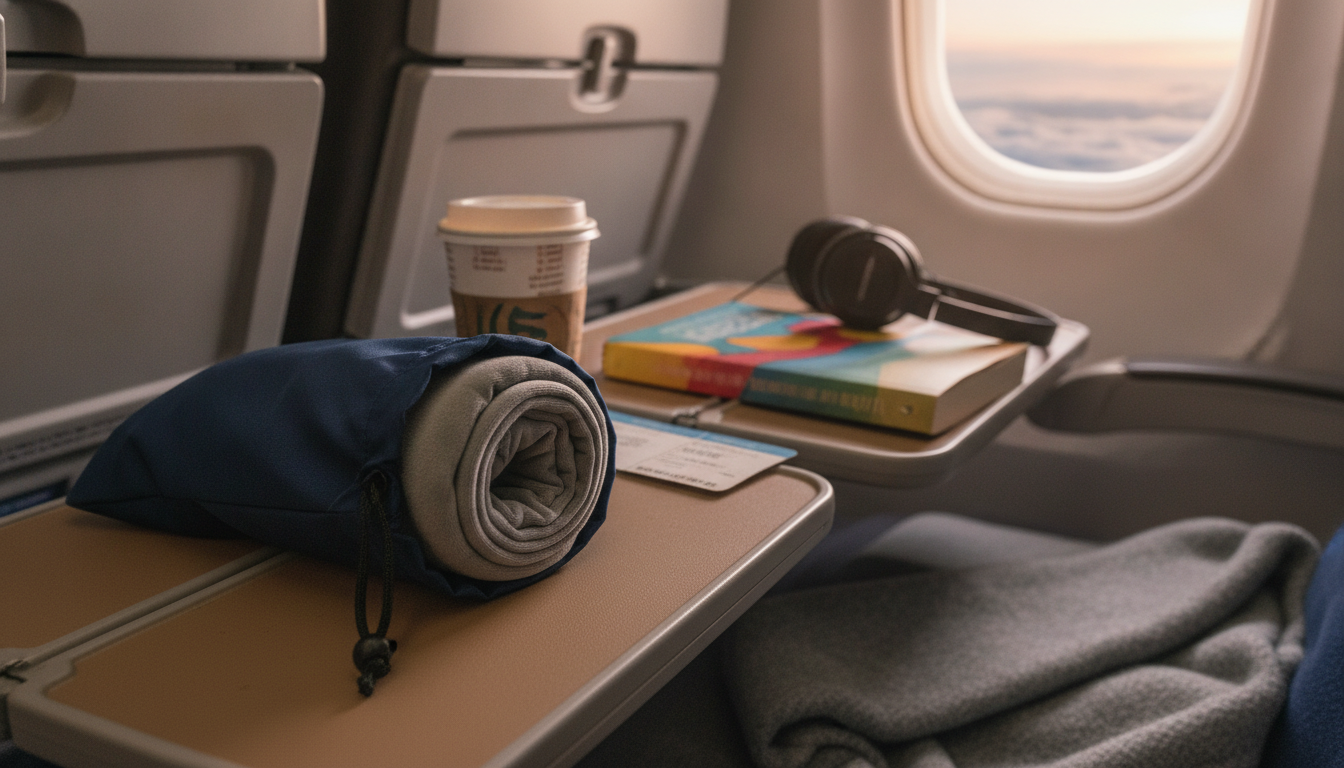
Seat geometry changes how a travel neck pillow performs. In an airline seat with a protruding headrest, thick padding behind the neck can create pressure instead of comfort. A low-profile rear panel is generally more compatible with upright economy seating, whereas taller side wings provide a barrier between your head and a hard bulkhead or window.
A wraparound inflatable neck pillow surrounds more of the neck and may use straps to keep its ends together. This secure shape is useful when you change position frequently, although it should never feel tight across the throat. Forward-lean pillows behave differently: they create a raised platform for the upper body and often include openings for the face or arms. They occupy more space when inflated but pack down much smaller than comparable foam structures.
Test the pillow in an upright chair before departure. Sit with your back against the seat, close your eyes and relax your neck for two minutes. If your chin drops sharply or the cushion pushes your head forward, adjust the air volume or choose another contour.
An inflatable travel pillow also differs from a lumbar pillow or inflatable foot rest. Neck models control head movement; lumbar cushions fill the curve behind the lower back; leg rests elevate the feet. These products are not interchangeable because their chamber height, pressure distribution and contact surfaces address different parts of the body.
For additional shapes that retain the pressure control and compact character of air chambers, compare the inflatable pillow alternatives. This helps separate a neck-specific design from rectangular camping pillows and other portable cushions.
The practical advantage of an inflatable pillow appears when the trip is over. Opening a two-way valve releases the air, allowing the chamber to roll or fold into a compact travel bag. This is particularly valuable for ultralight packers, train connections and short trips where every pocket of a carry-on matters.
Packability should not be judged by deflated size alone. Valve placement affects how quickly the pillow inflates and whether hard components touch your skin. A one-way valve prevents air from escaping between breaths, while a wide deflation opening helps flatten the chamber in seconds. Some designs include a built-in pump, reducing mouth contact and making pressure adjustments easier from an airline seat.
| Construction detail | Benefit for the pillow | Point to inspect |
|---|---|---|
| Two-way valve | Quick inflation and deflation | Cap seal and recessed position |
| Welded air chamber | Lightweight structure without loose fill | Even seams without sharp edges |
| Storage pouch with clip | External attachment to luggage | Secure closure and reinforced loop |
Cabin pressure changes can alter how firm an air pillow feels. Avoid filling the chamber until it is rigid; leaving a little give improves comfort and allows minor adjustment after takeoff.
Complete the pillow setup with only items that improve rest directly, such as an eye mask or storage clip. The coordinated travel accessories offer useful complements without changing the pillow’s central function: creating a portable place for the head to settle.
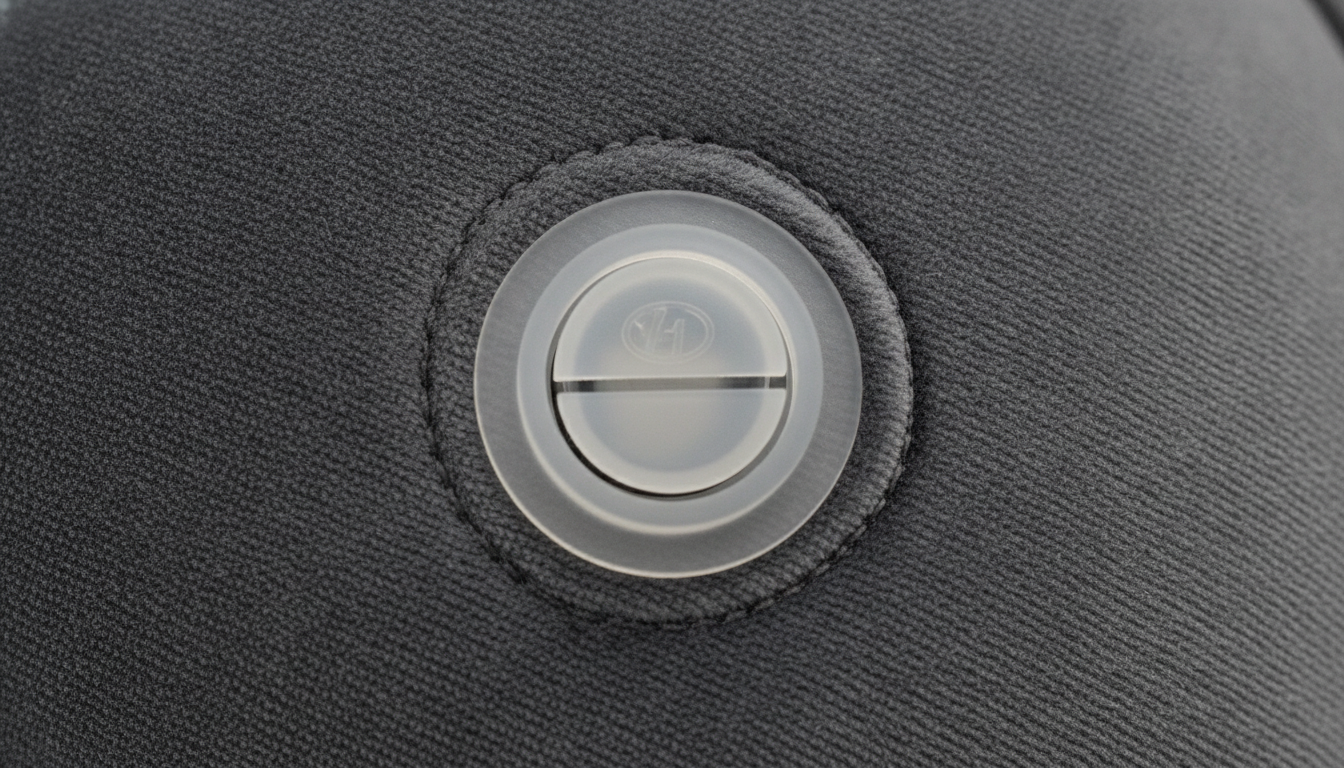
Because the pillow touches the jaw, cheeks and neck for extended periods, its surface matters as much as the air chamber. Bare synthetic material can feel smooth at first but may become clammy against warm skin. A removable cover adds a softer barrier, absorbs light moisture and simplifies cleaning after a flight.
Flocked and velvet-like finishes feel gently brushed, while breathable woven covers provide a drier sensation for hot sleepers. A cool-touch surface cannot change cabin temperature, but it can reduce the sticky feeling associated with direct contact against an unlined inflatable chamber. Check that seams sit away from the face and that the valve does not press beneath the jaw.
For routine care, deflate the pillow before removing its cover. Follow the care label, wash the textile layer separately when permitted and wipe the air chamber with a lightly damp cloth. Let every component dry completely before storage. This limits trapped moisture and protects the airtight seams from unnecessary stress.

Choose according to your resting posture before comparing secondary features. An inflatable travel pillow for side-leaning needs tall lateral support, whereas a forward sleeper benefits from a stable front surface. Your neck length, shoulder width and sensitivity to heat also influence which contour feels comfortable.
An inflatable travel pillow is a portable air-filled cushion designed to support the head, neck or upper body in a seated position. It can be inflated to a chosen firmness and deflated for compact storage, making it particularly useful on a plane, train, bus or car journey.
It saves space when not in use and allows pressure to be adjusted after boarding. On a long flight, the pillow may reduce unsupported head movement and offer a softer barrier against the seat or window. A compact air-filled model illustrates this balance between packability and support.
Neither fill is universally superior. Air offers adjustable firmness and a smaller packed volume; foam provides consistent cushioning without inflation. An air pillow suits travelers who prioritize luggage space and pressure control, while fixed foam may appeal to those who prefer an immediately plush, denser feel.
Look for chin support, a secure wraparound profile or a forward-leaning structure. The correct design should slow the head’s downward movement without pressing across the throat. A flight-focused support pillow can help you compare contours intended for upright airline seating.
It should feel supportive but not rigid. The surface needs enough give to cradle your head without collapsing, pushing your chin downward or creating pressure beneath the jaw. Inflate fully, release air in small increments and stop when your neck remains comfortably aligned in your natural resting position.
Remove and wash the cover only according to its care label. Wipe the deflated chamber with mild soapy water, avoid soaking the valve and dry it completely before folding. Keep sharp objects away from the surface, and store the clean pillow loosely in its bag between trips.
A well-chosen inflatable travel pillow turns adjustable air into targeted support for your actual sleeping posture. Focus on chamber shape, rear thickness, cover texture, valve access and packed size rather than assuming every neck cushion behaves alike. For a plane-specific configuration, explore this portable airline pillow design, then tune the pressure until the surface cradles your head without forcing it forward. Select the contour that matches your natural lean and give your next journey a calmer, more stable place to rest.


