


Travel Journal


A travel journal preserves the details that photographs often miss: the sound of an early train, the texture of a museum ticket, a hand-drawn route, or the name of a memorable meal. The right travel journal turns scattered notes into a coherent record that remains readable long after the trip ends.
Unlike a general notebook, it can bring planning, daily journaling, sketches, budgets, itineraries, packing lists, and collected paper keepsakes into one portable place. Choosing suitable pages and a reliable binding also makes it easier to maintain a five-minute habit on the road. Explore the formats below, decide how you want to capture each day, and select a journal that fits the pace and creative purpose of your journey.
A photograph records what stood in front of you; a written page can document what you noticed, expected, misunderstood, or discovered. Brief entries about weather, transport delays, conversations, tastes, and changing plans give each image context. Years later, these sensory cues often restore a particular moment more vividly than a folder of unlabelled photos.
The journal also gives every trip a narrative structure. Before departure, its pages can hold questions, dreams, research, hotel details, and a draft itinerary. During the journey, it becomes a daily log. Back home, it turns into a keepsake where captions, maps, drawings, and reflections explain the story behind the route.
| Record type | What it captures | Useful page format |
|---|---|---|
| Written diary | Events, impressions, conversations, and reflections | Lined paper |
| Sketch journal | Architecture, landscapes, objects, and color studies | Plain, heavier paper |
| Scrapbook diary | Tickets, receipts, photographs, and ephemera | Blank pages with generous margins |
Because the book travels with you, its place in your packing system matters. A compact journal can sit beside pens and adhesive supplies within a coordinated range of portable trip essentials, keeping the tools used to collect memories accessible rather than buried at the bottom of a bag.
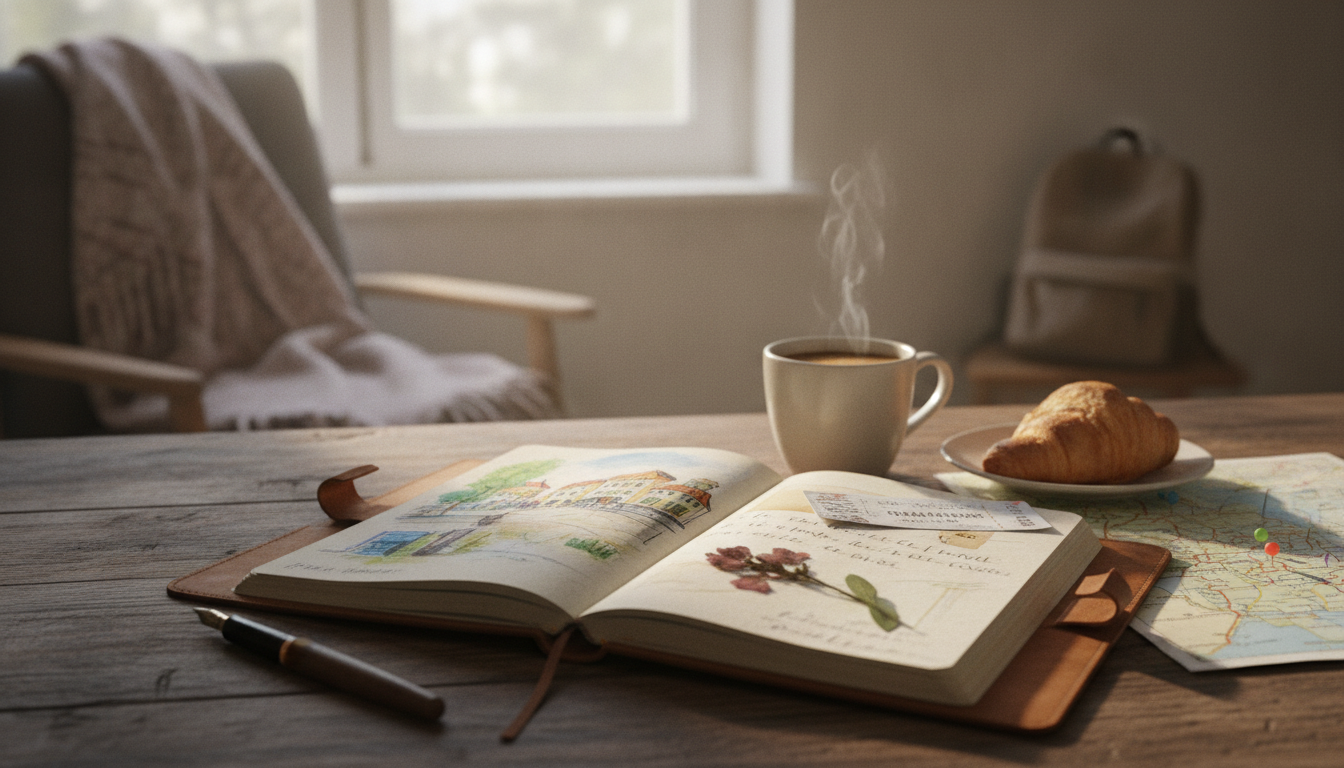
Page ruling influences how naturally you use a travel journal. Lined pages encourage sustained prose and orderly daily entries. Dotted paper provides subtle guidance for budgets, transport schedules, trackers, and hand-drawn layouts without dominating the finished page. Plain paper offers the greatest freedom for watercolor, collage, maps, and observational drawing.
Paper weight is equally important. Standard writing paper keeps a notebook light, while thicker sheets better tolerate ink, adhesive, and dry media. If you plan to paint, look for paper described as suitable for light washes and test it first: saturated watercolor can buckle ordinary pages or bleed through to the reverse.
| Page style | Primary strength | Consideration |
|---|---|---|
| Lined | Fast, readable prose | Lines remain visible beneath drawings |
| Dotted | Flexible grids, lists, and mixed layouts | Requires more page planning |
| Plain | Sketching and scrapbooking freedom | Long text may be harder to align |
Test your pen, pencil, marker, and adhesive on the final page. This reveals feathering, ghosting, and drying time before they affect an important entry.
A tactile cover can reinforce the character of the diary: linen feels softly woven, smooth board stays crisp, and leather develops a visible patina through repeated handling. Keep wet supplies physically separate from paper; a compact water-resistant organizer range can isolate small liquids and prevent a leaking container from damaging completed pages.
A travel journal should support the trip rather than compete with it. When days are filled with road journeys, museum visits, or long meals, an elaborate spread can feel burdensome. A repeatable five-minute format reduces that friction and still creates a useful record of every day.
This framework works for a round-the-world trip, a short city break, or a summer staycation because it records a specific outing rather than demanding a complete autobiography. One page might recall turquoise water and sun-warmed stone; another may preserve red rooftops, mountain air, market noise, or the amber light observed from a train.
“Record the detail that could not be reconstructed from the itinerary alone.”
Prepare a simple first-page index before departure so notes remain easy to find. Numbering pages and reserving space for transport, budgets, and packing lists gives the diary the utility of a planner while preserving room for spontaneous journaling. For document organization beyond the page, pair it with protective passport holders that keep essential papers separate from tickets intended for scrapbooking.
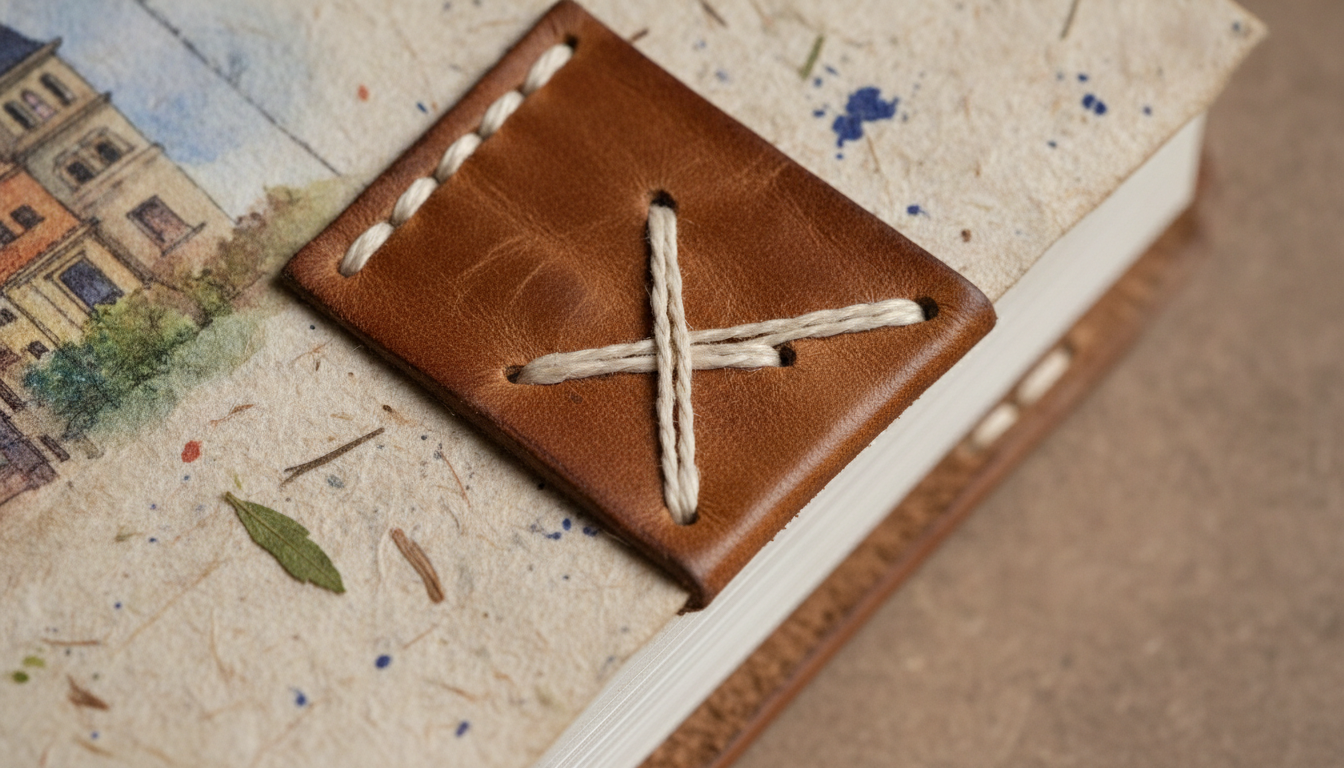
Layering makes a travel journal visually expressive without turning it into an overloaded scrapbook. Begin with handwriting, add one dominant visual element, then use smaller pieces to support the story. A hand-drawn street map can sit beside a tram ticket; a menu fragment may accompany a description of texture, aroma, and flavor.
Keep the visual hierarchy clear. The date and place should be easy to scan, the main memory should occupy the most space, and decorative elements should guide the eye rather than cover useful information. Neutral paper creates a calm background, while cream sheets lend entries a warmer, archival appearance.
For compact handwriting and restrained layouts, a refined minimalist notebook demonstrates how uncluttered pages can make small sketches and precise observations feel deliberate. This approach is especially useful when a journey includes many locations but luggage space is limited.
Do not attach damp flowers, food packaging, or dirty paper directly to the page. Dry and clean each item first to limit staining, odor, moisture, and deterioration.

Start with the way you genuinely record memories, not the layout you imagine using. A prose writer needs comfortable ruling and enough pages; an artist benefits from thicker plain paper; a planner may prefer prompts, lists, and dedicated spaces for accommodation, transport, and budgets.
Before adding a journal to your cart, simulate one completed spread on ordinary paper. Include the date, a short entry, a sketch, and a ticket. This quick trial shows whether you need more writing space or a freer layout. If collage is central to your practice, decorative journaling accents can create visual links between captions and collected ephemera without requiring drawing supplies.
A few unfinished pages are not a failure. They leave room to add printed photos, researched facts, and reflections while memories are still fresh after the journey.
It is a personal record that combines trip planning with observations made during and after a journey. Unlike a standard notebook, it may organize itineraries, expenses, daily entries, maps, drawings, photographs, and paper keepsakes. An unconventional memory-book format can suit travelers who prefer expressive pages over fixed prompts.
Paper offers a focused space without notifications, battery limits, or screen glare. Handwriting and drawing also slow observation, encouraging you to notice small details. Digital tools remain useful for location tracking and backup, so many travelers combine quick phone photos with thoughtful handwritten entries.
Estimate two pages per travel day, then add space for planning and a final reflection. A seven-day journey may use roughly 20 to 30 pages, while a long itinerary benefits from a larger book or shorter entries. Collage requires additional capacity because attached items increase thickness.
Yes, provided the paper and binding suit mixed media. Choose plain or dotted pages with enough surface strength for your tools, and alternate dense collage spreads with lighter written pages. A heritage-inspired trip diary complements aged tickets, sepia photographs, and warm-toned ink particularly well.
Document the texture of an ordinary day: breakfast, weather, a familiar road, a phrase you heard, or how the light changed. These quiet observations often become valuable because they reveal the rhythm behind major landmarks and planned outings.
Let ink and paint dry fully, avoid overfilling the spine, and keep the book away from loose liquids. Use acid-free materials when long-term preservation matters. At home, store the diary closed, upright, and away from direct sunlight, high humidity, and strong temperature changes.
Use both moments differently. During the trip, capture immediate facts and sensory impressions in brief notes. After returning, add photographs, captions, researched context, and longer reflections. This two-stage method preserves spontaneity while producing pages that remain clear and meaningful.
A travel journal transforms routes, everyday observations, and collected fragments into a lasting account of how a place felt. Choose page ruling for your preferred practice, match paper weight to your tools, and use a simple daily structure that remains realistic on busy days. For a tactile record designed to develop character through handling, consider a patina-rich leather notebook. Add the format that suits your trip to the cart, then begin with the destination, purpose, and one detail you hope to remember.


